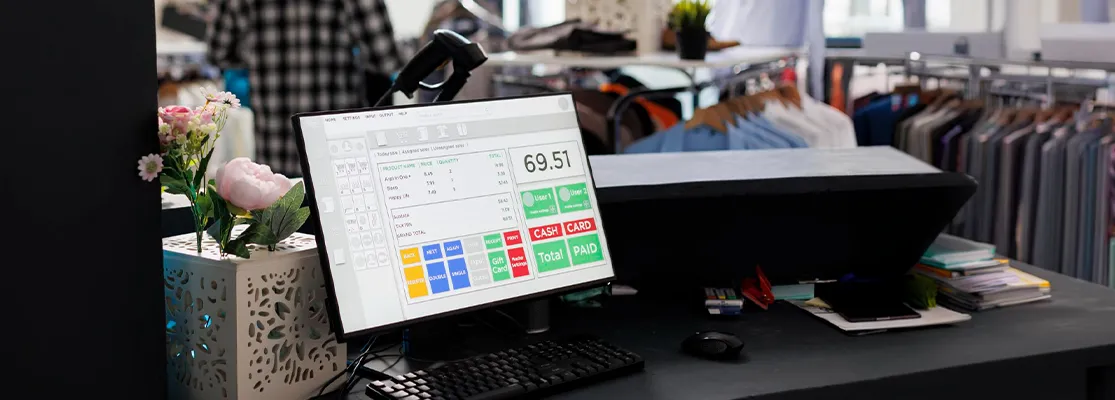
A customer browses a jacket on your website at 11 pm. The next morning, they walk into your store, ask if it is available in their size, and expect the staff member to already know what they were looking at. They pay with a loyalty point balance they accumulated online. They want the receipt emailed. And if the exchange process needs to happen later, they expect it to work, whether they are in-store, on the app, or on live chat.
This is not a future scenario. This is Tuesday.
The retailers who are meeting this expectation and generating the revenue that follows have one thing in common: a modern point-of-sale system that is not just a transaction terminal, but the connective tissue between every channel they operate. What enables this is deep, real-time retail POS integration built for the complexity of how consumers actually shop today.
For retail leaders, the strategic question is not just whether online-offline retail integration matters. The question is whether your current POS infrastructure can deliver it, and, if not, what the cost would be.
THE INTEGRATION IMPERATIVE: BY THE NUMBERS
|
73%
of consumers use multiple channels during their shopping journey (Harvard Business Review)
|
1.7x
more spending by omnichannel shoppers vs single-channel customers
|
34%
of retail executives cite inventory visibility as their top integration challenge
|
$1.75T
in global retail e-commerce sales in 2024, the majority influenced by offline touchpoints
|
The New Reality of Retail: Channels Without Walls
For most of retail’s modern history, online and offline were treated as parallel tracks: separate teams, separate P&Ls, separate systems, and often, separate customer records. The physical store had its POS system. The e-commerce platform had its own inventory and order management. The two rarely spoke to each other in real time, if at all.
The consumer dismantled this architecture. Not through policy, but through behaviour. When shoppers began researching online and buying in-store, and returning in-store what they bought online, and collecting click-and-collect orders, and expecting loyalty points to work everywhere, the seams in the siloed model became visible, expensive, and in many cases, catastrophic for customer experience.
Modern retail POS integration is the structural response to this shift. It is the technology layer that collapses the wall between physical and digital retail, allowing inventory, customer data, order history, pricing, promotions, and loyalty to flow without interruption across every touchpoint a brand operates.
THE COST OF NOT INTEGRATING
|
Introducing RuPOS
RuPOS is CI Global Tech’s purpose-built point-of-sale solution designed for the demands of modern retail and F&B operations. More than a billing tool, it is an end-to-end operational platform that manages orders, inventory, kitchen workflows, and customer communication from a single, unified interface. Built to work across Android and iOS, and engineered to function reliably with or without internet connectivity, RuPOS is designed for businesses that cannot afford downtime, do not have time for complexity, and need a system that scales with them as they grow.
Point of Sale System Online Offline Integration: How RuPOS Actually Works
The phrase ‘online-offline retail integration’ can sound abstract until you examine the specific mechanisms by which a modern point-of-sale system makes it operational. Integration is not a feature; it is an architectural approach that requires the POS to function as a central data hub rather than an isolated transaction processor.
Here is what a genuine point of sale system online offline retail integration looks like at the component level:
Unified Inventory in Real Time
Every unit of stock, whether sitting in a warehouse, a store backroom, on a shelf, or reserved for a pending online order, exists in a single, continuously updated inventory record. When a customer buys online, store-level stock is decremented. When a store associate receives new stock, the e-commerce platform reflects it immediately. This single source of inventory truth eliminates overselling, reduces phantom stockouts, and enables capabilities like ship-from-store and endless aisle, where a store associate can fulfil an online order from their location’s inventory.
Shared Customer Records and Purchase History
A customer who purchased twice online and once in-store should have one profile, not three. A modern POS retail system links identity across channels via email, phone number, loyalty programme ID, or payment method fingerprinting. Every interaction (browse, purchase, return, support query) enriches a unified customer record that staff can access at the point of sale, enabling genuinely personalised service at the counter, not just on the website.
Cross-Channel Order Fulfilment
Click and collect. Buy online, return in-store. Ship from store. Reserve in-store. These are not marketing taglines; they are operational commitments that require deep retail POS integration to execute without friction. The POS must receive, display, and process orders originating from the e-commerce platform. Store staff must be able to pick, pack, and mark online orders as fulfilled from the same interface they use for in-person transactions.
Consistent Pricing and Promotions
A promotion active on the website that is not recognised at the physical till is not a technology problem; it is a customer experience failure that erodes trust. Retail integration support ensures that pricing rules, promotional mechanics, coupon codes, and discount structures are enforced identically regardless of where the transaction occurs. This requires the POS and e-commerce platforms to draw from the same pricing engine, which is updated in real time.
Omnichannel Loyalty and Rewards
Points earned online should be spendable in-store. Tier status achieved through physical purchases should unlock digital benefits. A customer who reaches Gold tier on Saturday should be recognised as Gold when they log in Sunday morning. This requires loyalty infrastructure that sits above the channel, accessible to both the POS and the e-commerce platform simultaneously, updating in real time with every transaction.
| Does your current POS system give store staff access to a customer’s full purchase history, including online orders, at the moment of service? If not, what is the cost of that gap in assisted selling conversion? |
Built for the Real World: How RuPOS Works Across Every Environment
Most POS systems promise seamless connectivity, but collapse the moment the network does. RuPOS is engineered differently. Onboarding and implementation require a Wi-Fi connection, but once your system is live, it operates fully offline, so a dropped signal never interrupts a transaction, a kitchen order, or a customer interaction. Kitchen Order Tickets route automatically to the right station or kitchen location without manual intervention, and because RuPOS is built for both Android and iOS from a single environment, there is no fragmented codebase to maintain or reconcile across devices. For retail and F&B owners managing multiple touchpoints, the system scales without adding operational complexity. Order updates, alerts, and business notifications reach owners directly on WhatsApp, eliminating the need to log in to dashboards or manually chase down reports. From a single outlet to a multi-location operation, RuPOS is designed to fit the environment it is deployed in and not the other way around.
If your best customer walked into your store today, would your staff know what they purchased online last week, and would your loyalty system recognise them the moment they paid?
| CI Global Tech Delivering retail POS integration solutions that unify inventory, customer data, and order management across every channel your business operates. From implementation to ongoing Retail Integration Support, we help retailers build the connected infrastructure that modern commerce demands. Looking to unify your online and in-store operations? Talk to our retail technology experts to assess your current POS infrastructure and identify integration gaps that are limiting growth. |
