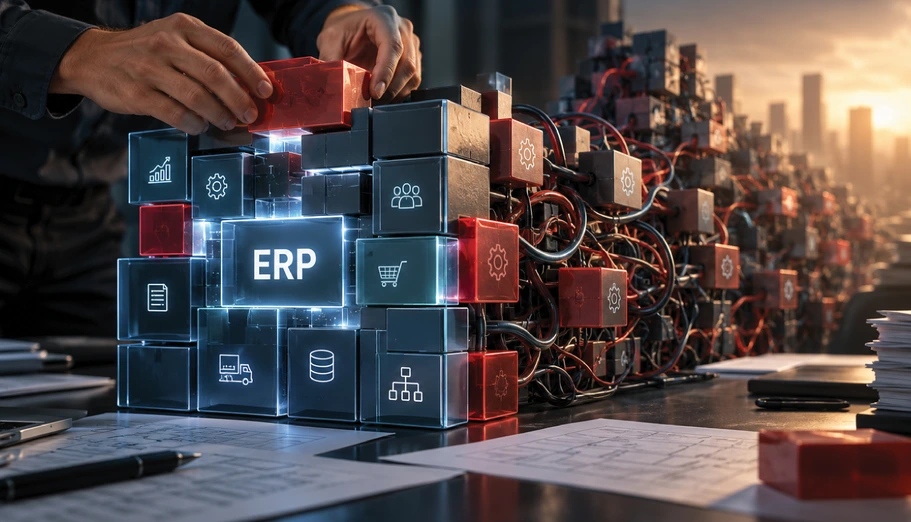
Every organization has unique processes, reporting requirements, and operational preferences. When an ERP system does not align perfectly with those requirements, the immediate response is often to modify the system. ERP customization can seem like a practical solution because it allows businesses to tailor workflows, screens, reports, and functionality to match existing operations.
Before moving forward with custom development, organizations need to evaluate the long-term implications. A customization may address a current requirement, yet it can also introduce ongoing costs, maintenance responsibilities, testing efforts, and upgrade complexities that continue throughout the life of the ERP system.
Making the right decision starts with understanding the difference between customization and configuration and knowing when each approach is appropriate.
Customization vs. Configuration: Understanding the Difference
Many ERP decisions become clearer when businesses distinguish between customization and configuration.
Configuration involves adjusting settings within the ERP’s existing framework. Examples include modifying approval workflows, changing user permissions, creating business rules, or enabling available features. Since configuration uses built-in capabilities, it generally requires little or no code changes.
Customization involves changing the underlying software, workflows, database structures, user interfaces, or business logic to support a specific requirement. These changes are often developed for a single organization and may not exist in the standard product.
Consider an HR approval process. A standard ERP may route leave requests directly to a manager. An organization may prefer a workflow that routes requests through a team lead before reaching the manager. In many cases, configuration can accommodate this requirement without changing the application’s code.
Understanding this distinction is important because configuration typically carries fewer long-term implications, while customization creates responsibilities that extend far beyond the initial development effort.
Why Customizations Increase Costs Over Time
The initial development cost is only one part of the equation. Every customized component must be maintained, tested, documented, and supported throughout the ERP lifecycle. When a software vendor releases upgrades, patches, security updates, or new features, organizations must verify that existing customizations continue to function correctly. This creates several ongoing activities:
- Development effort to validate custom components
- Quality assurance testing during upgrades
- Documentation updates
- Bug fixing and enhancement work
- Additional support requirements
A customization that appears simple today can require repeated attention during every future release cycle. Organizations often focus on solving an immediate operational requirement while underestimating the cumulative effort required to support those changes over several years.
The Hidden Risks of Unnecessary Customization
One of the most common ERP customization challenges occurs when organizations attempt to replicate every existing process instead of evaluating whether the process itself should evolve.
Employees naturally become comfortable with established workflows. When a new ERP system introduces a standardized process, resistance to change can sometimes lead teams to request custom modifications.
A more effective approach involves evaluating whether the business requirement is truly unique or whether the ERP’s standard functionality can achieve the same outcome through configuration and user training.
When businesses automatically customize every process variation, they increase system complexity and reduce the advantages that modern ERP platforms provide through standardized best practices. A detailed assessment often reveals that many requirements can be addressed without custom code.
Documentation: The Foundation of Sustainable Customizations
Documentation plays a critical role whenever customization is approved. Every custom workflow, report, database change, integration point, and business rule should be documented thoroughly. Without proper records, future teams may struggle to understand why a customization was created, how it works, and what dependencies exist.
Problems become more significant when the original developer is no longer available. For example, a support team investigating a defect may have difficulty identifying the source of the issue. Upgrade teams may not know which custom components require testing. Enhancement projects may overlook dependencies that affect existing functionality.
Strong documentation supports:
- Knowledge transfer
- Faster troubleshooting
- Reduced dependency on individuals
- Easier maintenance
- Better upgrade planning
Organizations that invest in documentation reduce operational risk and improve long-term maintainability.
Integrations Add Another Layer of Complexity
ERP systems rarely operate in isolation. Most organizations connect their ERP environment with CRM platforms, HR systems, finance applications, procurement tools, eCommerce platforms, or third-party business applications.
Customizations often depend on data exchanged through these integrations. When an external system changes its schema, API structure, business logic, or functionality, the customization may require modification as well. If those changes are not identified and managed properly, data inconsistencies and process failures can occur. This is where many ERP maintenance challenges emerge.
Integration partners may release updates independently, creating a need for ongoing monitoring, testing, and validation. Every change within the connected ecosystem increases the importance of governance and communication across teams.
Organizations should evaluate integration dependencies carefully before approving major custom development initiatives.
Scalability and Future Growth Considerations
Business requirements evolve continuously. New departments are added. Processes change. Acquisitions occur. Regulatory requirements emerge. ERP vendors release new capabilities.
A customization that works effectively today must also support future growth. As organizations scale, maintaining numerous custom modifications can become increasingly difficult. Each new release requires validation. Each enhancement introduces new testing requirements. Each integration update creates another point of review.
Scalability should be part of every customization discussion. Business leaders should evaluate whether a proposed modification supports long-term objectives or creates future constraints. A scalable solution should remain manageable as the organization expands and technology environments become more complex.
Questions Leaders Should Ask Before Approving Custom Development
Before moving forward with custom functionality, decision-makers should clearly define the business value and assess available alternatives. A structured evaluation should include the following questions:
- Can the requirement be addressed through configuration?
- Is the process unique enough to justify custom development?
- What will the ongoing support and maintenance costs be?
- How will future upgrades affect the customization?
- What documentation standards will be followed?
- How will integrations be impacted?
- Will the solution remain scalable over the next several years?
These discussions help organizations establish clear ERP customization requirements before committing resources to development. A thoughtful evaluation process often prevents unnecessary complexity while preserving flexibility for future growth.
Building an ERP Strategy That Supports Long-Term Success
Successful ERP initiatives balance business requirements with sustainability.
Custom development has a place when a genuine business need cannot be addressed through standard functionality or configuration. At the same time, every customization introduces responsibilities that continue long after implementation is complete.
Organizations that evaluate requirements carefully, document changes thoroughly, and consider long-term maintenance implications are better positioned to maximize ERP value while controlling costs.
At CI Global Technologies, we help businesses assess ERP requirements, evaluate configuration and customization options, and build scalable ERP environments that support growth. If you’re planning an ERP implementation, upgrade, or optimization initiative, connect with our team to explore the right approach for your business.
